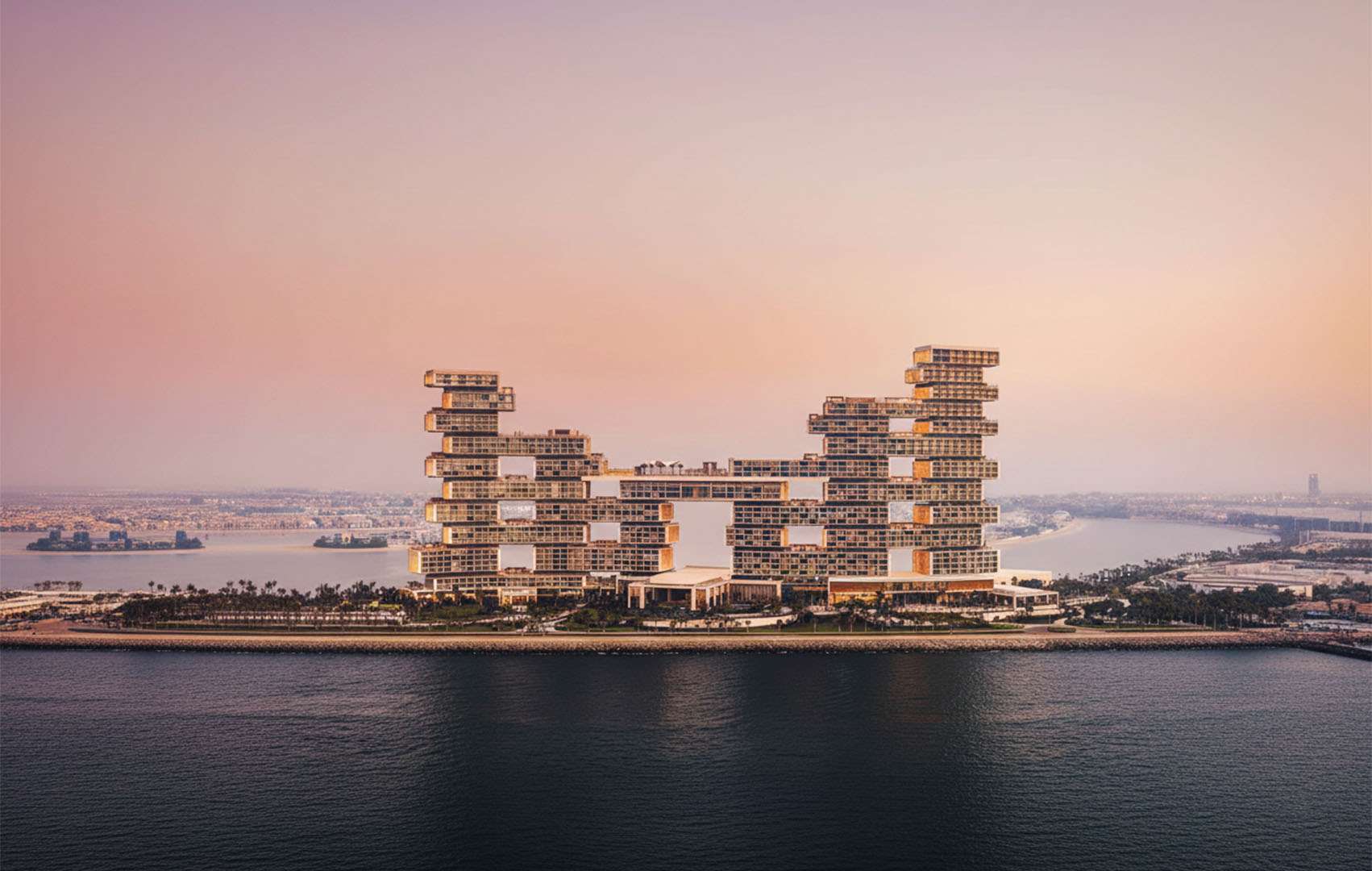
Buying property in Dubai from Saudi Arabia: GCC ownership rights, money, tax and family use
For Saudi buyers in Dubai: GCC nationals may own outside freehold areas, the riyal and dirham pegs, Saudi tax and zakat, no residence visa needed, and buying for family use.
In this guide
A Saudi citizen can buy property anywhere in Dubai, in their own name, without a local partner and without a residence visa. That wider right comes from Dubai Law No. 7 of 2006, which treats nationals of the Gulf Cooperation Council (GCC) states like UAE nationals for ownership, whereas other foreigners are confined to designated freehold areas. Saudi Arabia accounted for 4.4% of international online interest in Dubai property between June and August 2026, fifth among countries, according to DXBinteract data reported by Emirates 24|7 on 23 September 2026; that measures interest, not purchases. This guide covers the ownership rights, moving the money, the tax position at home, residence for you and your family, and buying for family use. It is general information as of 12 November 2026, not legal, tax or religious advice.
Can Saudi citizens own property anywhere in Dubai?
Yes. Article 4 of Dubai Law No. 7 of 2006 limits the right to own real property in Dubai to UAE nationals, nationals of the GCC states, companies wholly owned by them, and public joint stock companies. Everyone else may hold freehold, or a usufruct or lease of up to 99 years, only with the Ruler's approval in areas he designates, which began with the list in Regulation No. 3 of 2006.
What that means in practice:
- More choice of location. A Saudi buyer can register a home outside the designated freehold areas, for example in an older neighbourhood where sales to other foreigners are not possible.
- The same process. The purchase, the 4% Land Department fee and registration are the same as for any buyer; see how to buy property in Dubai.
- Most new homes are in freehold areas anyway. Developers selling off-plan to an international market build mainly in designated areas, so for a typical apartment or villa purchase the wider right makes little difference.
A company wholly owned by Saudi or other GCC nationals has the same wider right. One with a non-GCC shareholder is treated as a foreign company and limited to designated areas. The Dubai Land Department asks companies for a trade licence, legalised and translated constitutional documents and a shareholder certificate, and requires a company to register with it before its first transaction.
The rule in brief is in our glossary entry on GCC nationals' ownership rights.
What rights do GCC nationals have in the other emirates?
Each emirate makes its own ownership law, and the GCC position is broadly similar, though not identical.
| Emirate | GCC nationals | Other foreigners | Source |
|---|---|---|---|
| Dubai | May own anywhere | Designated areas only | Law No. 7 of 2006, Article 4 |
| Sharjah | Ownership limited to UAE and GCC nationals | Approved projects and other exceptions only; otherwise a usufruct of up to 100 years | Law No. 5 of 2010, amended by Law No. 2 of 2022 (WAM, 31 October 2022) |
| Ras Al Khaimah | May own outside the freehold areas | Designated freehold areas | Mitchell's guide, updated 9 July 2026 |
| Abu Dhabi | Not stated directly in the text we read | Investment zones | ADREC: the Executive Regulations limit apartment registration to investment areas only for buyers who are neither UAE nor GCC nationals |
For Abu Dhabi, the regulations imply that GCC nationals are not subject to the investment-zone restriction on apartments, but the law does not say so in terms, so ask the registering authority before buying outside an investment zone. Our Sharjah guide and foreign ownership guide cover the rules in more depth.
How do you move money from Saudi Arabia to the UAE?
By bank transfer from an account in your own name to the account named in the sale contract. Both currencies are fixed to the US dollar, which keeps the exchange arithmetic simple.
- The riyal. The Saudi Central Bank (SAMA) stated on 5 April 2020 that it remains committed to the official rate of SAR 3.75 to the dollar.
- The dirham. The federal portal u.ae states that the dirham has been pegged to the dollar since February 2002 at AED 3.6725.
At those official rates one dirham is about SAR 1.0211. Your bank's rate and charges will differ slightly.
| Price in AED | About SAR at peg rates | 4% Land Department fee in SAR |
|---|---|---|
| 750,000 | 765,800 | 30,600 |
| 1,000,000 | 1,021,100 | 40,800 |
| 2,000,000 | 2,042,200 | 81,700 |
| 5,000,000 | 5,105,500 | 204,200 |
Two practical points. First, Dubai developers, brokers and banks carry out know-your-customer and anti-money-laundering checks, so keep statements showing the source of funds. Second, for an off-plan purchase pay only into the project escrow account named in the contract; see buying off-plan in the UAE. We did not find a published SAMA limit on outward transfers by individuals for property purchases; ask your bank what documents it needs for a large transfer before you reserve.
Is a Dubai property taxed in Saudi Arabia?
For an individual, the published summary suggests not, though it does not address foreign property directly. PwC's Worldwide Tax Summaries, reviewed 29 July 2026, state that there is no individual income tax scheme in Saudi Arabia, and that income tax is not imposed on earnings derived only from employment in Saudi Arabia. The page does not deal with rent or gains from property abroad held by an individual.
Zakat. PwC's corporate summary, reviewed the same day, describes zakat as charged at 2.5% on a company's zakat base, broadly its net worth, with Saudi citizen investors liable in most cases and GCC citizens treated as Saudi for this purpose. If you hold the Dubai property through a Saudi company, it may form part of that company's zakat base, and you should ask your adviser. Whether personal zakat is due on a property held privately is a religious question outside the scope of this guide.
The UAE side. PwC's UAE summary, reviewed 9 September 2026, states that the UAE does not tax individuals on income, so rent and gains from a home you own personally are not taxed in the UAE. Property held through a company is a different matter, covered in the UAE property tax guide.
Do Saudis need a visa to live in their Dubai home?
No. The federal portal u.ae, updated 13 July 2026, states that GCC citizens do not need a visa to enter the UAE. The Emirates ID page, updated 17 February 2026, offers its urgent ID service to "GCC nationals residing in the UAE" alongside UAE nationals. We did not find an official page that states in terms whether a GCC citizen living in the UAE needs a residence permit, so check with ICP if you intend to move to Dubai full time.
Two consequences follow:
- Property visas are not needed by you. The Golden Visa and the two-year investor visa exist for nationals who need a residence permit. A Saudi buyer does not need to buy to a visa threshold.
- Family members with other passports do. Dubai's GDRFA offers residence for wives and children of GCC nationals who hold foreign passports, with a residence permit fee of AED 200, small additional charges, AED 500 more if applied for inside the country, and a medical examination for anyone over 18 (GDRFA service page, checked 12 November 2026). ICP lists two-year renewable residence for family sponsored by GCC nationals.
Our guide to sponsoring family on a UAE property visa explains how those rules work for non-GCC buyers.
What changes when you buy a Dubai home for family use?
Mainly ownership structure, letting and running costs. Many Saudi buyers want a home for the family's own use, perhaps during the summer or for children studying in the UAE, rather than a pure investment. A few points change when that is the aim.
- Whose name goes on the title. Joint ownership in the UAE carries no right of survivorship: when one owner dies, their share passes under inheritance rules and can be frozen until the heirs are confirmed. The federal civil personal status law of 2022 is for non-Muslims, so a Muslim family should take advice from a UAE lawyer on how succession will be handled before deciding whose name, or which company, holds the property. Our foreign ownership guide explains the mechanics.
- Letting it when you are not there. A home used for a few months a year can be let as a holiday home in between, under a permit; see holiday home rental in Dubai. Long lets and family use do not mix easily.
- Running costs. Service charges are payable whether or not the family uses the home; see service charges in Dubai.
- Finance. If you want a Dubai mortgage, read non-resident mortgages in the UAE before reserving.
What does buying cost, and how long does it take?
The costs are the same for a Saudi buyer as for anyone else. The largest is the Dubai Land Department transfer fee of 4% of the price, payable on resale and off-plan purchases alike. On a resale you will usually add broker commission, the trustee office fee and, if you borrow, mortgage registration and bank fees. Our Dubai property buying costs guide itemises each one and the purchase cost calculator totals them for your price.
Timing depends on the route. A resale transfers at a trustee office once the seller has a developer's no-objection certificate and any mortgage is settled. An off-plan sale must be registered by the developer on Oqood, the interim register, within 90 days of the contract under Dubai Law No. 13 of 2008, with the title deed issued after completion. You do not have to travel for every step: a buyer abroad can act through a power of attorney, which, if signed outside the UAE, will need notarising and attestation before a Dubai office accepts it.
What about buyers from Kuwait, Qatar, Bahrain and Oman?
The UAE side is the same. Dubai Law No. 7 of 2006 extends its ownership right to nationals of all the GCC states, and u.ae's statement that GCC citizens need no visa to enter covers all of them. The rules on family members with foreign passports, published by GDRFA, are framed for GCC nationals generally.
The home side differs by country, and we have not reviewed each one's treatment of foreign property income and gains for this guide. Check your own country's position, for example in PwC's Worldwide Tax Summaries, before buying. If you would like help finding property that suits a family brief, in or outside the freehold areas, contact us.